


Lapeyre Stair, Inc
On July 25, 1944, just a month shy of his eighteenth birthday, young J.M. Lapeyre filed his first patent for a shrimp peeling machine that would revolutionize how his father, the founder of Grand Caillou Packing Company, did business. The patent was issued in 1947, and in 1949, J.M. along with his father Emile and uncle Fernand founded Peelers, Incorporated, which later became Laitram Corp.
- Website
- www.lapeyrestair.com
- Address
- 5117 Toler Street Harahan 70123 United States
- Phone
- 800-535-7631
Your personal data may be shared with third-party manufacturers based on your platform activity. You can opt out anytime in Profile Settings, in accordance with applicable data protection laws.


Why Choose the Alternating Tread Stair?
When placed against ships stairs & fixed vertical ladders, the alternating tread stair is the safe alternative, when space is at a premium
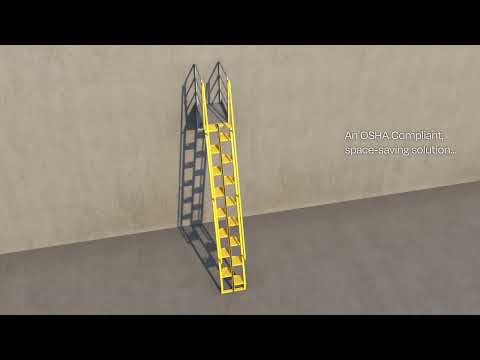
OSHA classifies alternating tread stairs (alternating tread devices) as non-standard stairs and states they are acceptable to use in applications where it is not feasible to use standard stairs.

Versus a Ships Stair
Virginia Tech conducted a study comparing alternating tread stairs to ship stairs and concluded that alternating tread stairs have a clear comfort and safety advantage over ship stairs.

Versus a Fixed Ladder?
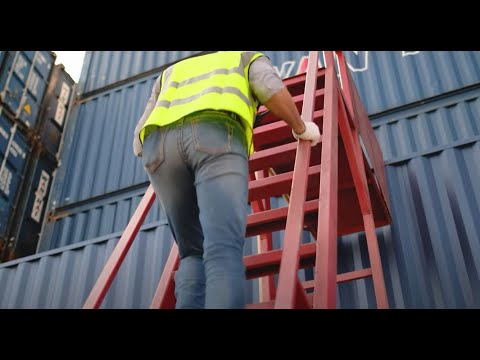
Ladders are consistently one of OSHA's top ten most cited violations for general industry. The need to address the hazard they present in the workplace was one of the reasons for the 2017 update to the Walking-Working Surfaces standard. Source: Federal Registry, Vol. 61, No. 223

Versus a Standard Industrial Stair
Less space? Choose an alternating tread stair for applications where space is limited. The 68° alternating tread stairs require the least amount of space but the steeper angle is less comfortable to use. The less steep angle of 56° alternating tread stairs is more comfortable to use while also requiring less space.

Ladders & Fall Injuries, Musculoskeletal Disorders
Fall from ladders account for 20% of all fatal and lost work-day injuries in general industry. SOURCE: Bureau of Labor Statistics
The National Institute for Occupational Safety and Health defines musculoskeletal disorder (MSD) as a soft-tissue injury caused by sudden or sustained exposure to repetitive motion, force, vibration, and awkward positions.



Latest products

Bookshelf
Industrial Catalog
Alternating Tread Stair Data Sheet
Master Specifications for Alternating Tread Stairs
Master Specifications for Alternating Tread Stairs (Aluminum)
Handrail Extension Data Sheet
Crossover Stairs
Conveyor-Crossovers.pdf
Crossover Stair Data Sheet
Master Specifications for Alternating Tread Crossover Stairs
Rooftop Access & Applications
Sample Systems Catalog
Master Specifications for Metal Stairs
English (US)


